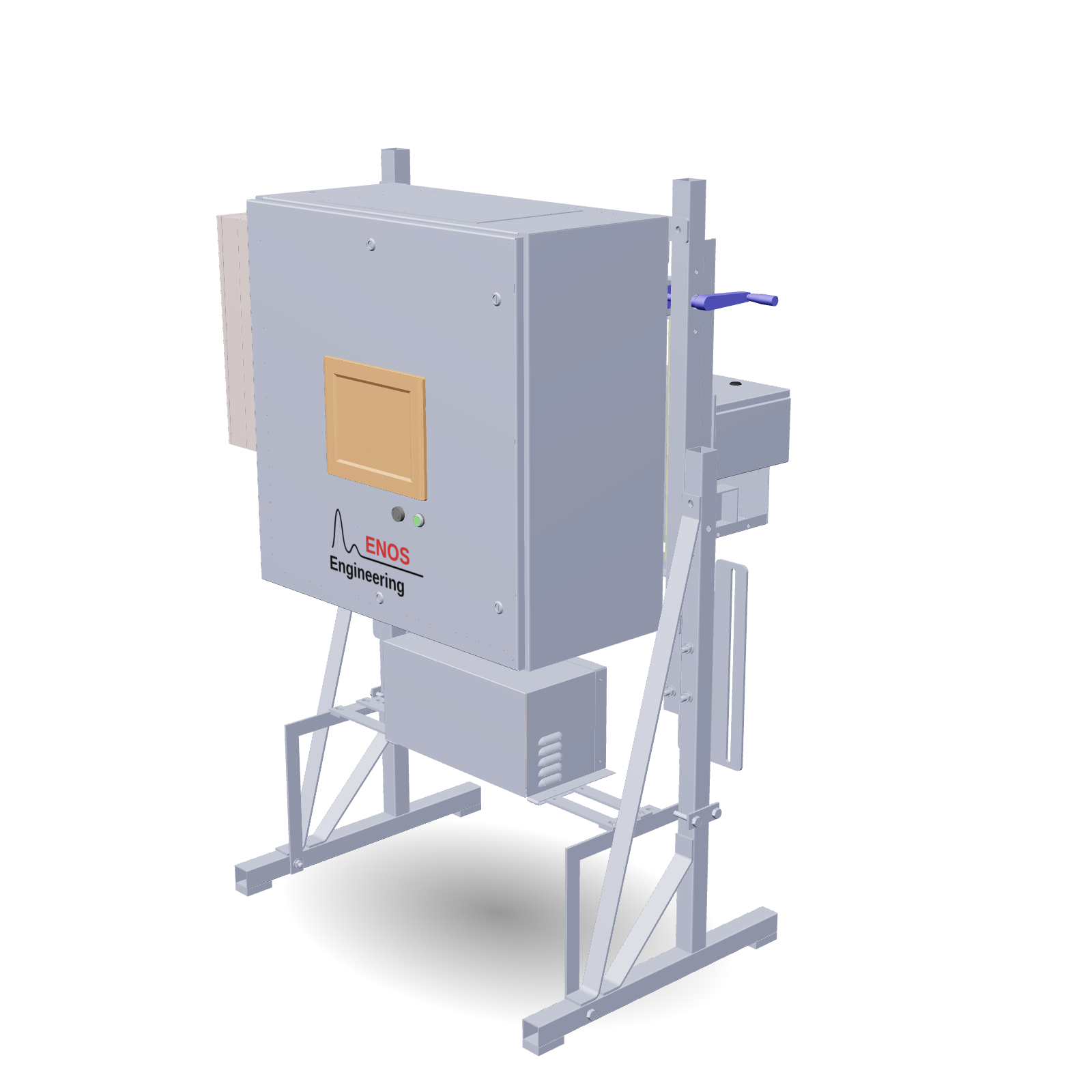
What it does
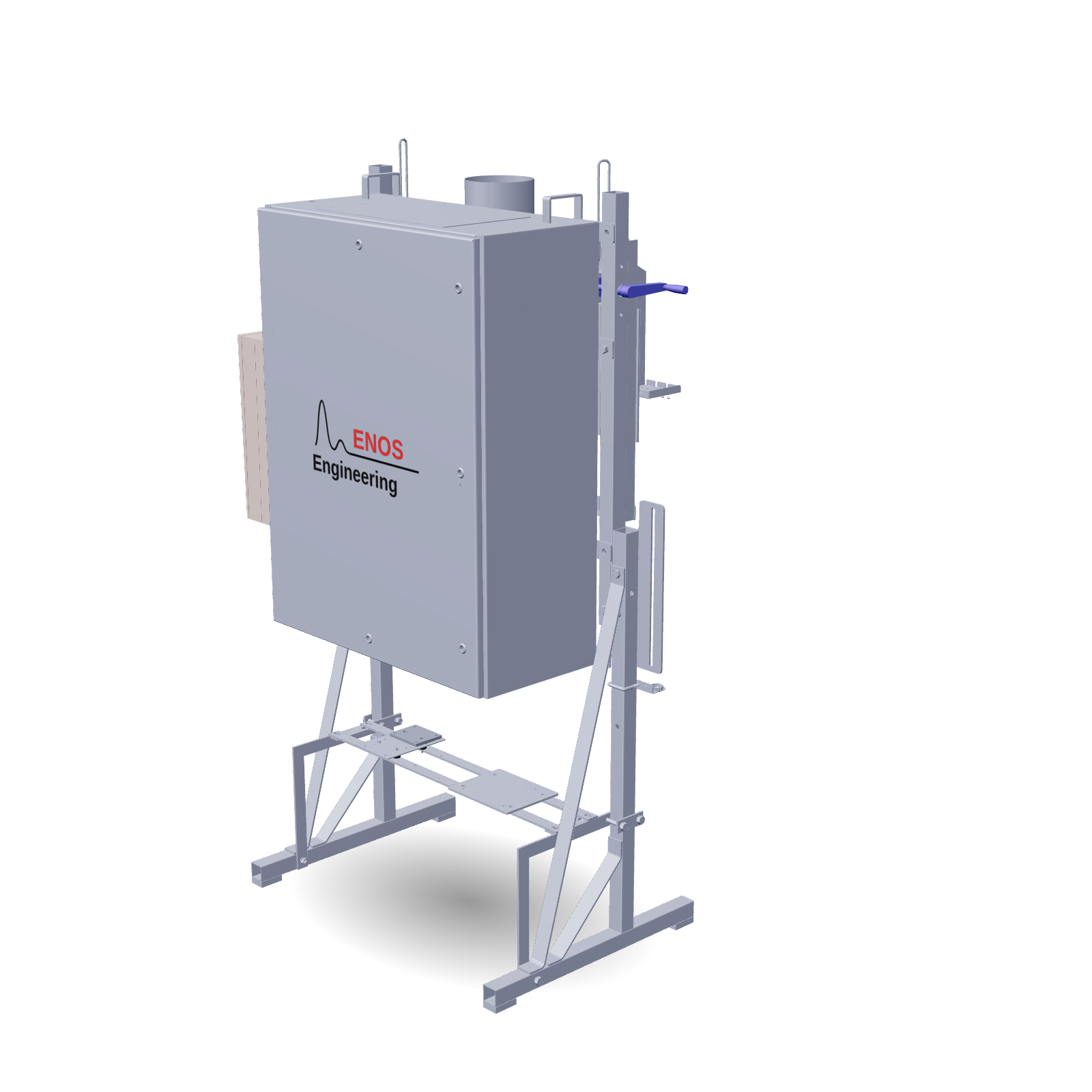
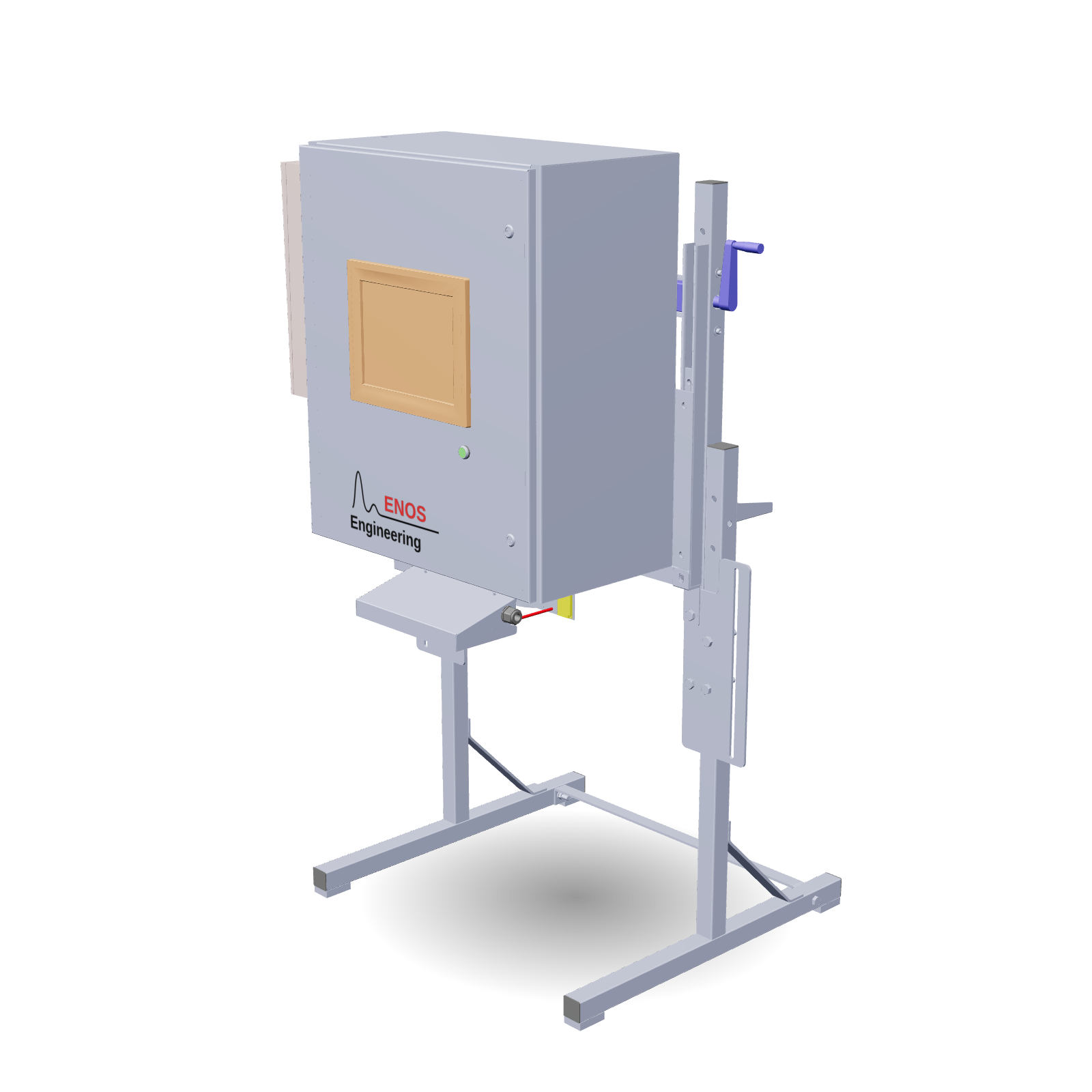
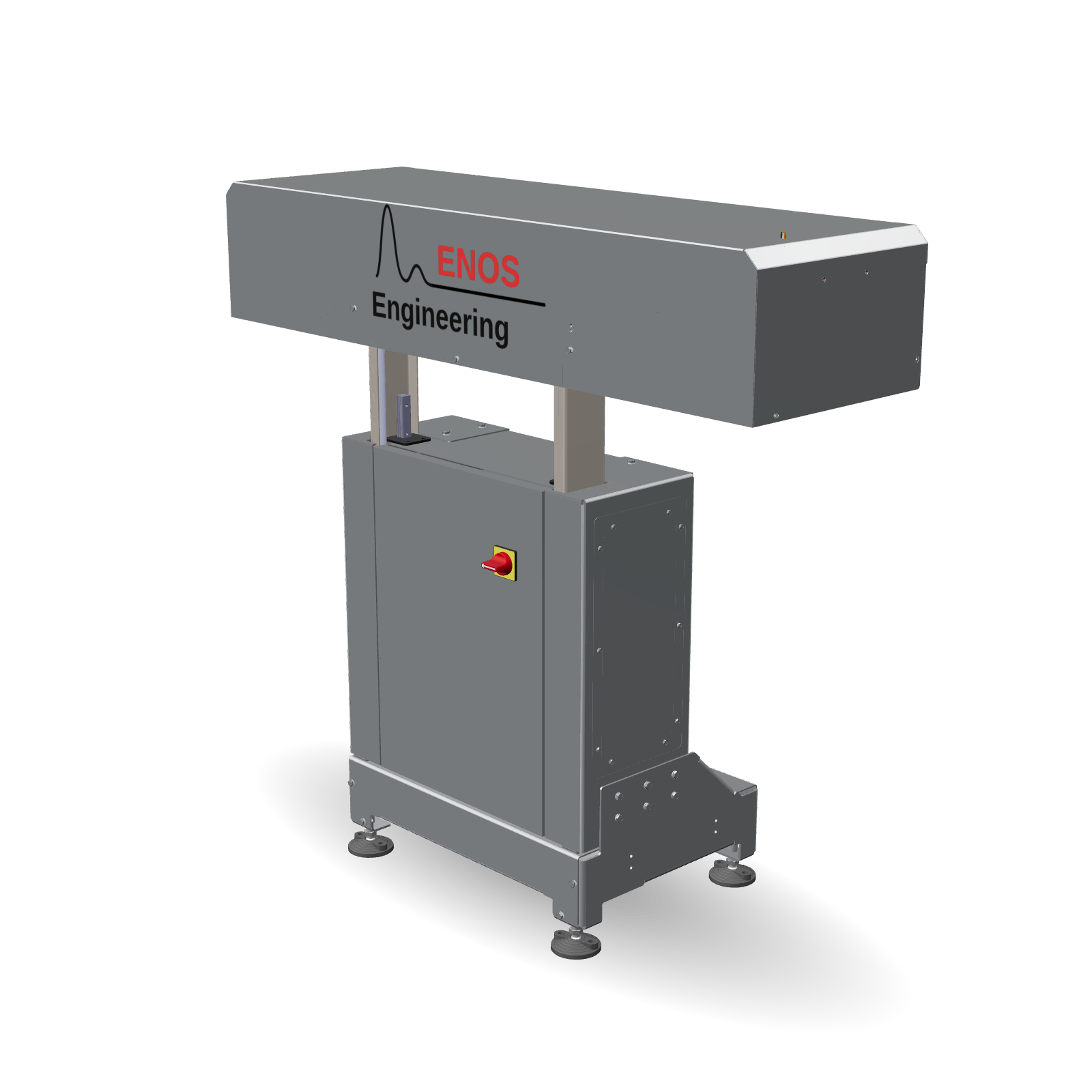
The ENOS W-10 takes a non-contact pneumatic sample from the headspace of each returned water jug and routes it through up to three detection modules in parallel. Returnable jugs are often misused to store fuels, solvents or homemade drinks, so catching and removing contaminated bottles before the washer protects the wash water, the finished product and the consumer — without the inconsistency of people sniffing jugs by hand. The non-contact sampling method also rules out bottle-to-bottle cross-contamination.
In the line
The floor-mounted station sits ahead of the washer, with hydraulic height adjustment to switch quickly between 3-, 5- and 6-gallon jugs. When a contaminated jug is detected, an audible alarm and red light fire and the bottle is removed automatically or manually. A Windows touchscreen lets operators monitor reject counts, production history, system status and parameters, and a calibration mode automatically identifies and analyzes test bottles.
What each module catches
- Aromatics
- Aromatic hydrocarbons — benzene, thinner, distillates
- Ammoniacal
- Ammonia, decomposing organics, nitrogen pesticides and fertilizers
- Hydrocarbons
- Gasoline, diesel, kerosene, used motor oil
- Alcohols
- Alcohols and artificial flavors — limonene, p-Cymene
Options
- Vision Optional ENOS Vision module that captures an image of the bottle bottom for a 100% inspection zone, catching foreign objects inside the jug.
- Autocal Calibration mode that automatically identifies and analyzes test bottles and stores the results for stable detection across shifts.
The ENOS A100 for large water bottles
The simplest way to place the ENOS W-10: it is the ENOS A100 for large returnable water bottles. Same vapor trace detection, same sniffer principle, same contaminant families — fuels, solvents, ammonia, alcohols — but built around the 3, 5 and 6 gallon water-cooler bottle instead of a 1.0 to 3.0 L PET bottle, with hydraulic height adjustment to change format and a throughput matched to a water line rather than a soft-drink line.